

Tips For Better Living In An Open-Plan Space
Zeta Potential Analyzer vs. Particle Size Analyzer: What’s the Difference?
A zeta potential analyzer quantifies the electrokinetic potential at a particle’s slipping plane, reporting millivolt values that predict colloidal stability and electrostatic interactions Zeta Potential test. A particle size analyzer measures physical dimensions and distributions (nm–µm) via techniques like dynamic light scattering or laser diffraction, reporting means, D10/D50/D90 and polydispersity. Size data inform packing, optics and transport; zeta potential predicts aggregation propensity and formulation windows. Both are complementary; further sections explain use cases, preparation and interpretation.
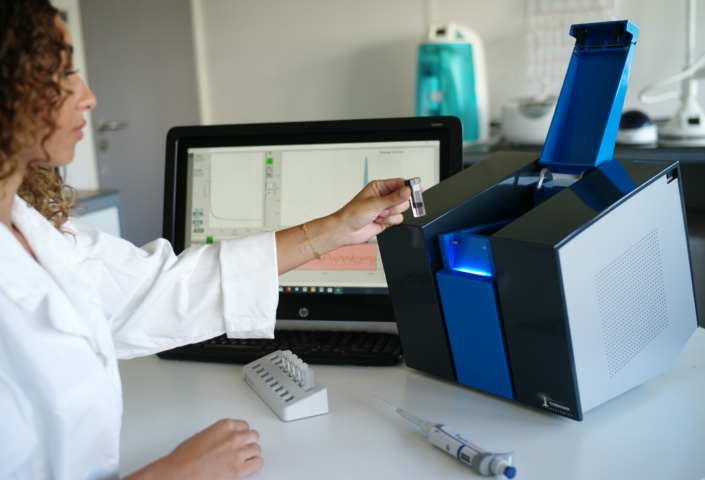
What Zeta Potential Measures and Why It Matters
In colloidal and nanoparticle characterization, zeta potential quantifies the electric potential at the slipping plane of a charged particle moving through a liquid under an applied electric field; it consequently reflects the magnitude and sign of electrostatic repulsion or attraction between particles Lab Alliance, which directly governs suspension stability, aggregation kinetics, and interactions with surfaces and biomolecules. The measurement isolates effective surface charge influence on particle mobility, enabling prediction of electrostatic stability thresholds and formulation adjustments. Quantitative zeta potential guides pH tuning, ionic strength control, and surfactant selection to modulate surface charge, minimize aggregation, and optimize interfacial behavior for targeted applications.
How Particle Size Analyzers Work and What They Reveal
While zeta potential characterizes electrostatic behavior governing particle interactions, particle size analyzers quantify physical dimensions and size distributions that determine light scattering, sedimentation, and diffusion behaviors. Instruments employ methods such as dynamic lightscattering and laser diffraction to convert measured signals into volume, number, or intensity distributions. Dynamic lightscattering analyzes temporal fluctuations to infer hydrodynamic diameter; laser diffraction measures angular scattering to derive equivalent-sphere distributions across broad ranges. Sample preparation, concentration, and refractive index models influence accuracy. Output reveals mean sizes, polydispersity, and multimodal populations, enabling process control, formulation optimization, and troubleshooting without addressing electrostatic stability metrics.
Key Differences in Data, Units, and Interpretation
Compared to particle size outputs, zeta potential data use fundamentally different physical units and convey distinct interactional information: size analyzers report diameters (nm, μm) and distribution metrics (mean, D10/D50/D90, polydispersity index) derived from scattering or sedimentation models, whereas zeta potential is expressed in millivolts and quantifies surface charge-driven electrokinetic mobility under an applied field. Metrics inform control strategies differently: particle size guides packing, filtration, and optical behavior; zeta potential predicts colloidal stability and repulsion. Interpretation requires attention to measurement precision, sample preparation, and model assumptions.
- Units: nm/μm vs mV
- Statistical descriptors vs mobility-derived values
- Sensitivity to concentration and ionic strength
- Calibration and measurement precision

When to Use One Instrument vs. Both Together
Having outlined how size and zeta potential convey different physical quantities and inform distinct control strategies, selection criteria for instruments depend on the questions being asked about a sample. Use a particle size analyzer when dimensional distribution, aggregation state, or polydispersity drive performance specifications. Use a zeta potential analyzer when surface charge, stability windows, or formulation electrostatics require control. Use both together when formulation optimization or failure analysis demands correlation of electrostatic state with hydrodynamic behavior; employ simultaneous calibration and complementary troubleshooting to guarantee data coherence. Instrument choice should map to decision points: specification verification, root-cause analysis, or iterative formulation control.
Practical Tips for Sample Prep and Reliable Measurements
Practically, reliable zeta potential and particle size measurements hinge on disciplined sample preparation that controls concentration, dispersion state, and ionic composition to match instrument working ranges and the physicochemical question. Operators should standardize cleaning protocols, verify temperature control, and document each preparative parameter. Use filtration or centrifugation to remove aggregates; dilute to recommended count rates; equilibrate samples and cells to measurement temperature; apply sonication with controlled energy and duration. Calibrate instruments with reference standards and run blanks. Maintain traceable records of pH, conductivity, and additives to guarantee reproducibility and facilitate troubleshooting.
- Standardize cleaning protocols and calibration
- Control temperature and equilibration
- Remove aggregates; adjust concentration
- Log pH, conductivity, additives
Conclusion
Zeta potential and particle size analyzers provide complementary but distinct information vital for colloidal characterization. Zeta potential quantifies electrostatic surface charge and predicts stability, whereas particle size analyzers determine physical dimensions and distribution. Data differ in units, measurement principles, and interpretation; selecting instruments depends on formulation goals, stability assessment, or process control. Proper sample preparation, concentration control, and instrument calibration are essential. Combined use yields a thorough understanding of dispersion behavior and stability mechanisms.